“Why Bighorn?” That’s the question Shawn Bearden asked me in December as we chatted about him becoming my coach. “Bighorn is not an easy first hundred miler” he continued pointing out that my running resume did not suggest that I was exactly ready for this. That same question came up again from at least two other runners during the race itself and the answer is easy: because Pete was doing it. Pete and I were introduced though Strava friends before The North Face Massachusetts in 2017 and ran much of that together. Though we only met in person as he gave me a ride to the race, I loved his company and wisdom (he has finished Leadville!). He recommended The North Face San Francisco and I it loved just as much as he said I would. So when Pete mentioned he was thinking about Bighorn, I started thinking about it too.
The question Shawn was also asking was why a hundred? That answer is not a crisp one. I absolutely wanted to test myself against the challenge but I also was looking for new ways to explore running after adventures from the mile to marathon. New gear is also appealing, so there’s that. Rational people, like say my wife, could point out that there are many ways to challenge yourself and explore running requiring less absence for your family but the idea had become stuck in my head. Oh, and Doug was into them.
Shawn also pointed out that I should take six months off from running as I filled him in on my 2017, a year that involved my first 100+ mile week, my first MRI, my second MRI, my first stress fracture and a nagging but never terrible right groin injury. The second MRI, right before the Boston Marathon had shown both
a labral tear and ostitis pubis, an overuse injury in the pubic symphysis. My symptoms since March 2017 were fourfold: pain in the right pubic bone when I sneezed, right adductor pain during and after runs, and right hip flexor pains during and after hard workouts. Occasionally, I would have a gnawing pain in the pubic symphysis similar to the thigh pain I had when I was diagnosed with the stress reaction in femur. I told Shawn I understood his recommendation but was asking him to coach me to a PR in Boston and finish Bighorn and I would manage the injury; I’m bad at taking advice. And so it began.
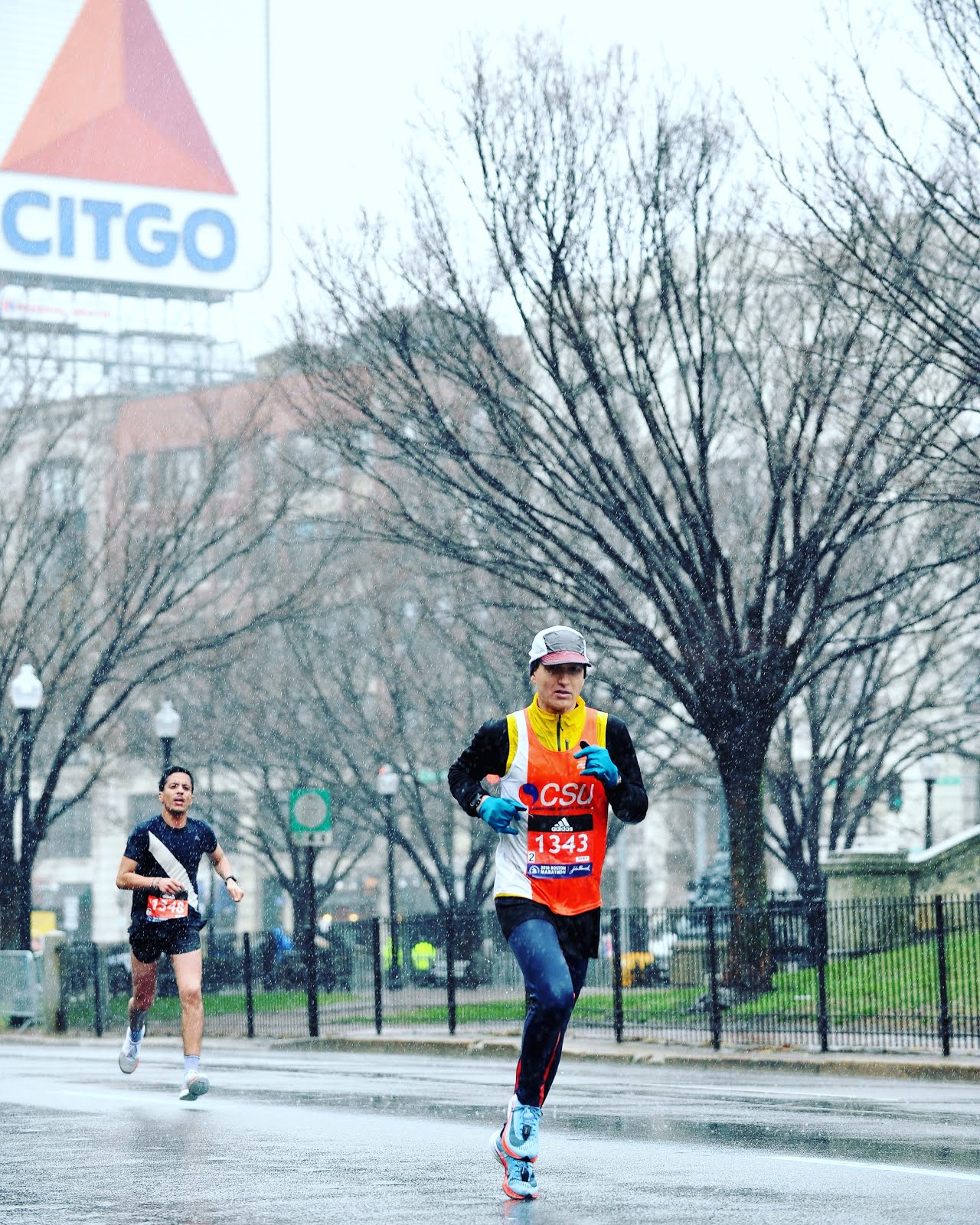
Boston build up was great with new workouts, new discipline and new confidence. I felt like Shawn gave me exactly what I was looking for: smarter running. I ran my PR in Boston in a challenging and chilly headwind and felt confident I could run my real goal of a sub 2:45 on a better day. Throughout I had been looking ahead to Bighorn.
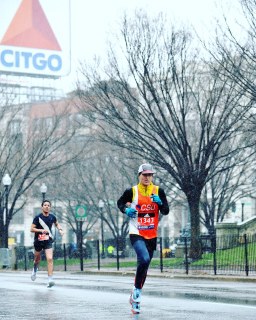
The turn around time to Bighorn was relatively short but long enough to learn some lessons. First, my running life is not built around running on trails. It should have been obvious to me that if 2/3 of my weekly mileage was run commuting, getting a lot of trail miles would take a change in my training on weekends. The week after Boston I maintained my running streak through some sort of left hamstring injury I felt first in Wellesley that resulted in a 6 inch bruise in the back of my thigh. That first weekend I ran the TARC 50k on the trails of Weston. I was slow but felt like it would provide a jumpstart to a good training block. Shawn wanted me to increase my weekly vert and I resurrected the slow Summit Ave hill repeats I had learned in prep for the TNF SF in the fall.
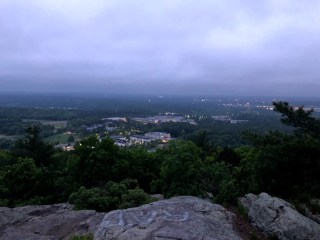
Pacing was another lesson I had to learn. Throughout the training block he asked me to focus periodically on 100 mile race pace during my runs. This was an abstract concept for me having never run 100 miles. Camille Heron ran sub 8 min miles in her world record in 2017 and while I knew I was no great shakes, I didn’t really have a concept of what my 100 mile race pace would be. I started going to The Blue Hills on Saturday and Sunday mornings and “running” the skyline trail for 3-6 hours. I understood that my pace on the trail would be slower than my road paces but boy is it different to put in a three hour workout and see 12 miles instead of 22 on the watch.
The result was lower mileage weeks than I had anticipated “needing” to really prep for the race. High mileage weeks are mentally analogous to saving for retirement for me. Putting in the work now will pay dividends late in the race is my logic. I was never entirely clear during this build up whether I was really on or off Shawn’s prescribed plan. He didn’t call me out but I was over running his plan by as much as half some weeks. I put in a few 120+ mile weeks and felt like I had checked those boxes.
One final challenge was footwear. Last year at Bighorn was famously muddy and cold resulting in lots of DNFs and injuries. My vast experience of two 50 milers taught me that the Hoka ATR 3, while comfortable, were not sufficiently durable and the Salomon s/lab Ultra were wonderful. I had collected trail shoes from Altra, Salomon, New Blanche, Nike, and Hoka but had never run in them since I essentially never run on trails in my regular marathon training. I feel like I have road shoes 100% dialed for just about any workout and condition but I had all these trail shoes and no opportunity to figure out what would work for my feet or the conditions. The problem was essentially unsolvable for me: (1) the trail conditions and consistency were unknowable and (2) you don’t run training runs that even approximate 100 miles. After trying a few options, I decided on the Hoka Speedgoat 2 for my main shoes as they were soft but with impressive traction.
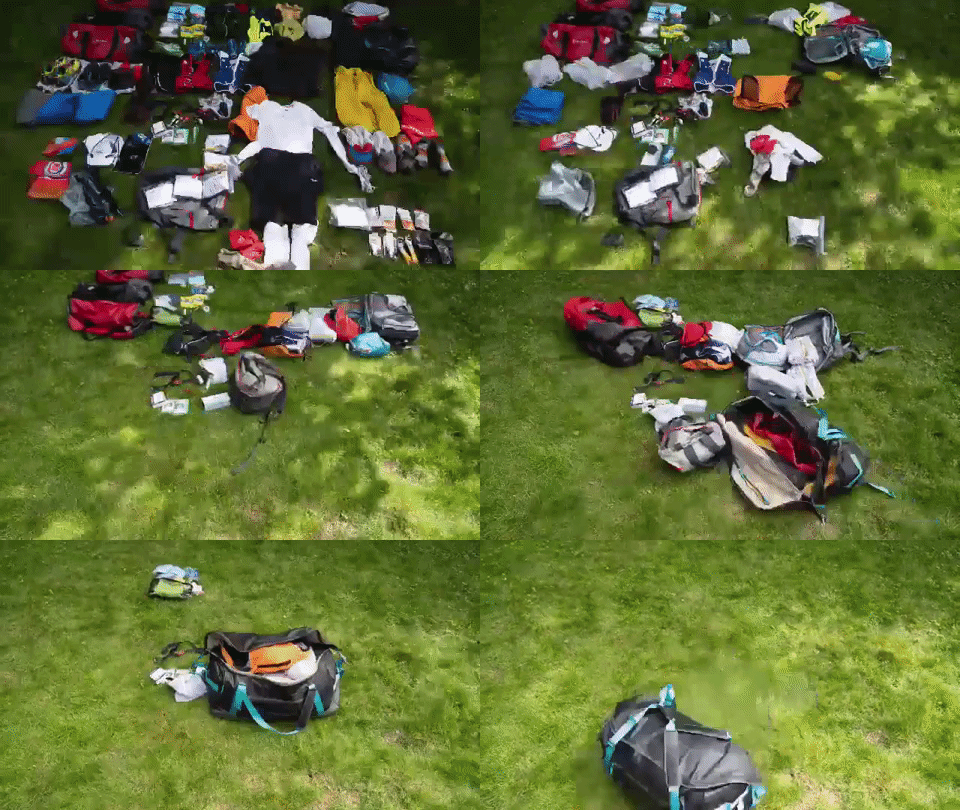
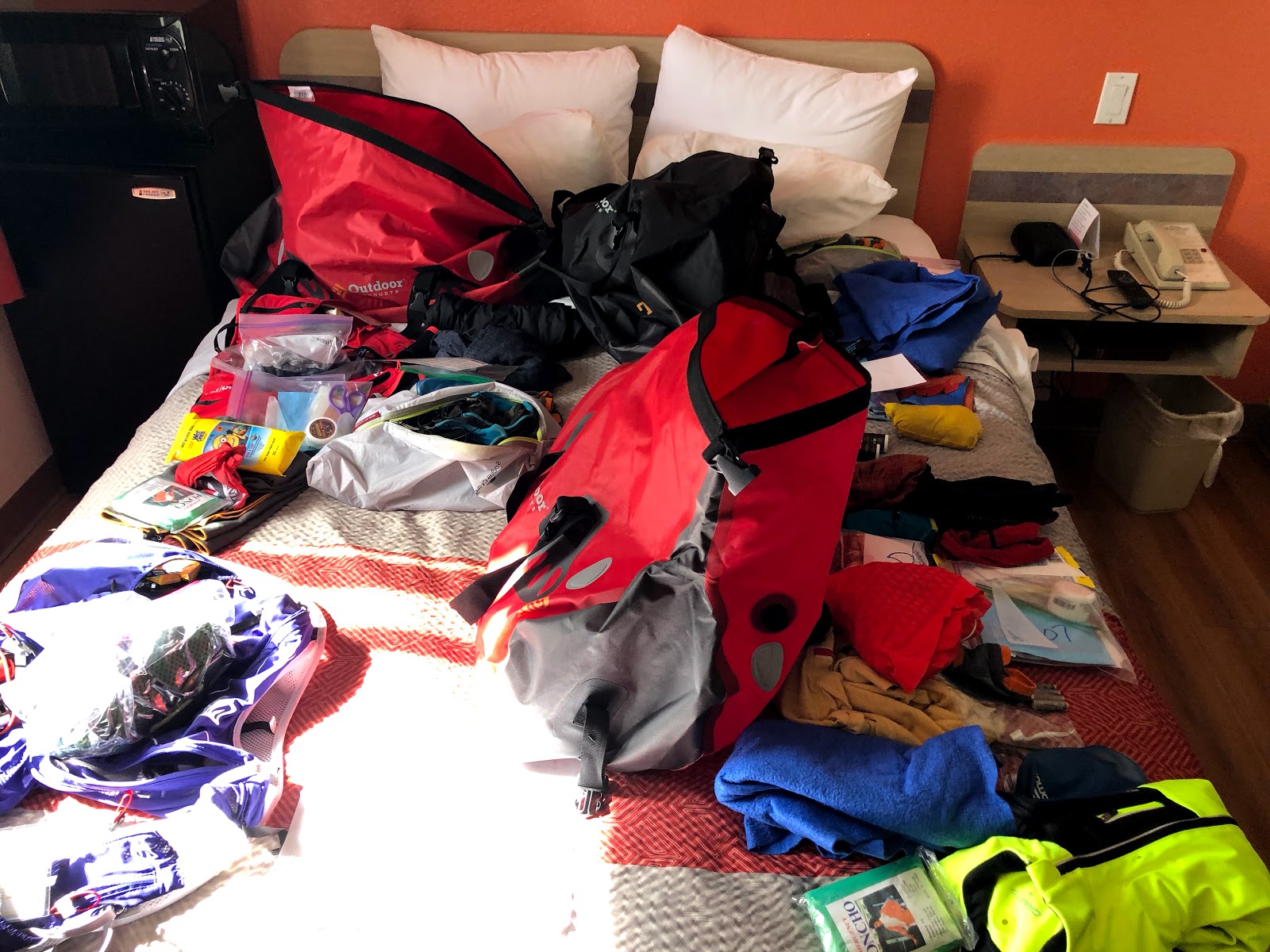
“Jumping in the car now” Pete texted me around 4:30 am on the Wednesday before the race. I had just finished my streak-mandated 5 miles. I hadn’t been sleeping a lot in the weeks leading up to the race unlike a mild success prior to Boston but I did my best. I had been playing with packing for about four weeks and as the race weather became more certain, the weekend before I settled on my final packing list. This included three pairs of shoes (Speedgoats, Salomon s/lab Ultra 2, Salomon XA Amphibs), three vests, poles, three headlamps, and more calories that anyone could get in during the race. For nutrition, I had been practicing with Maurten, a colloid gel drink that contains 320 calories in 500 mL of water. Given that this approximates how much the gut can absorb in an hour, I vaguely understood that I couldn’t just drink that if it was hot as I’d need more hydration but I figured it would have to be a game-time decision on how to hydrate. I also had been practicing with GUs gels, waffles, and GU blocks. They all worked great on training runs with no GI issues (this is typically running code for diarrhea but in ultras it can also be vomiting). My plan was to get nutrition only through the stuff I brought with me. At ultras, aid stations will typically have real food but having had some GI issues at the two 50 milers, I decided I was going to stay disciplined with just my stuff. The result was a full size bag weighing about 45 lbs plus a planned carry on. Pete then texted me that he was going to do carry ons and shared photos of what appeared to be a tiny roller and satchel. Embarrassed, I repacked into a 35 L carry on and a “personal item” that was a 32 L backpack. Both were bursting at the seams and I needed to wear the Salomon Ultras to make things fit. No one was going to claim I was arriving unprepared for this. So I grabbed my two giant “carry on” bags and joined Pete in the cab.
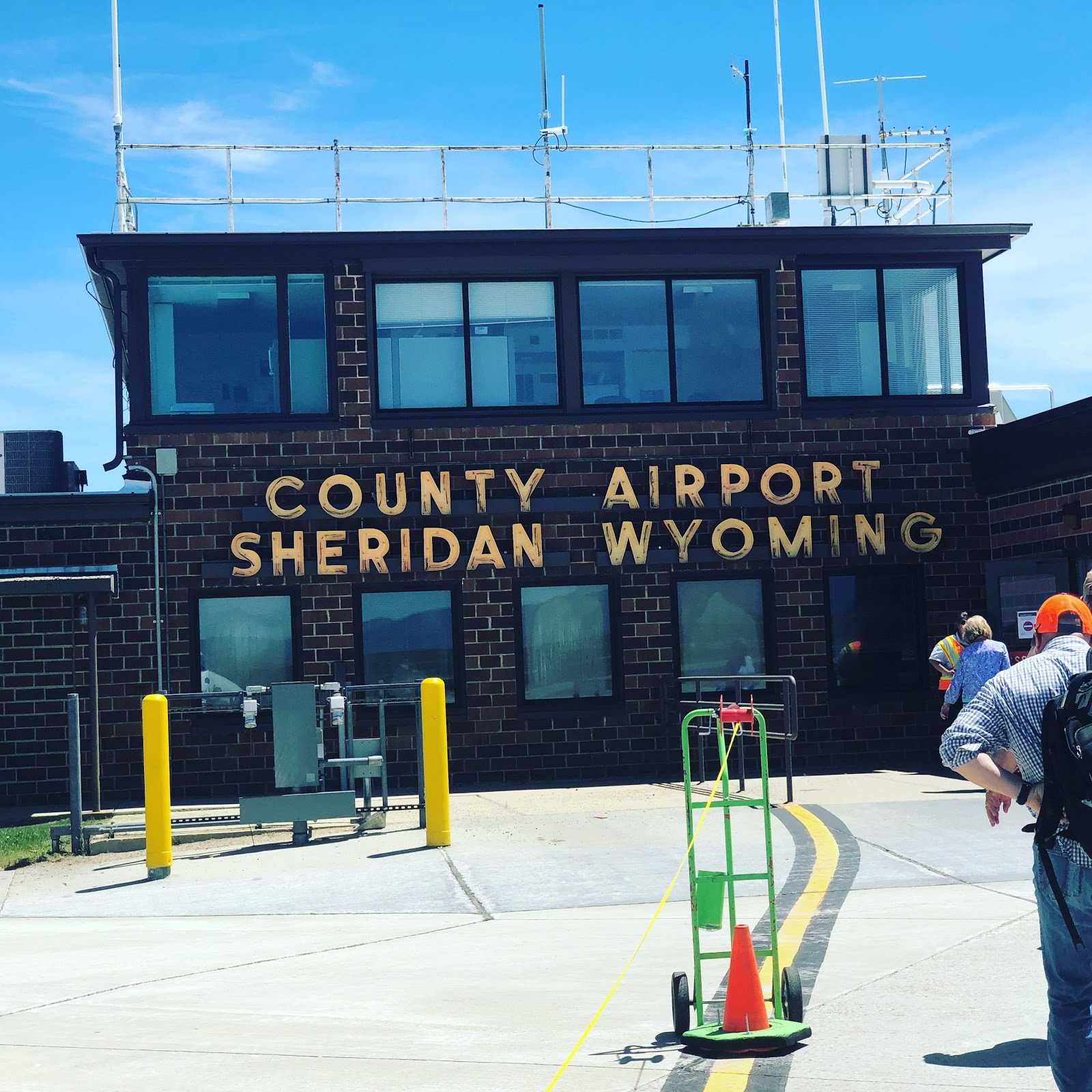
We had booked all our travel back in January and decided to fly to Sheridan rather than flying to Billings or Cheyenne and driving. This required a transfer in Denver to Denver Air Connection, the only airline that appeared to make regular flights to Sheridan. The flight to Denver was blissfully empty and both my bags went in the bin. In Denver we easily transferred to the Sheridan flight. Both my bags needed to go in the back of the plane but it wasn’t a big deal. The flight there went though Riverton and after than short stop, we flew on to Sheridan arriving in the blinding, intense, headache inducing sun. Pete had rented a car for us and after grabbing our bags, we headed to Motel 6 where we had reserved rooms through Sunday figuring it would be easier than checking in and out of the hotel Friday and Saturday. We got driving directions to Motel 6 and arrived at where we thought it should be but saw no Motel 6. After a few more searches, we discovered we were at the right place but the operator had changed to Baymont Inn. The manger had our names in the system and we each got a room. It is not clear what plan Motel 6 was following as there had been no contact that they had sold that location to another company. The Baymont Inn was nice enough for our purposes and we got rooms across from each other and just propped the doors to chat as we got ready.
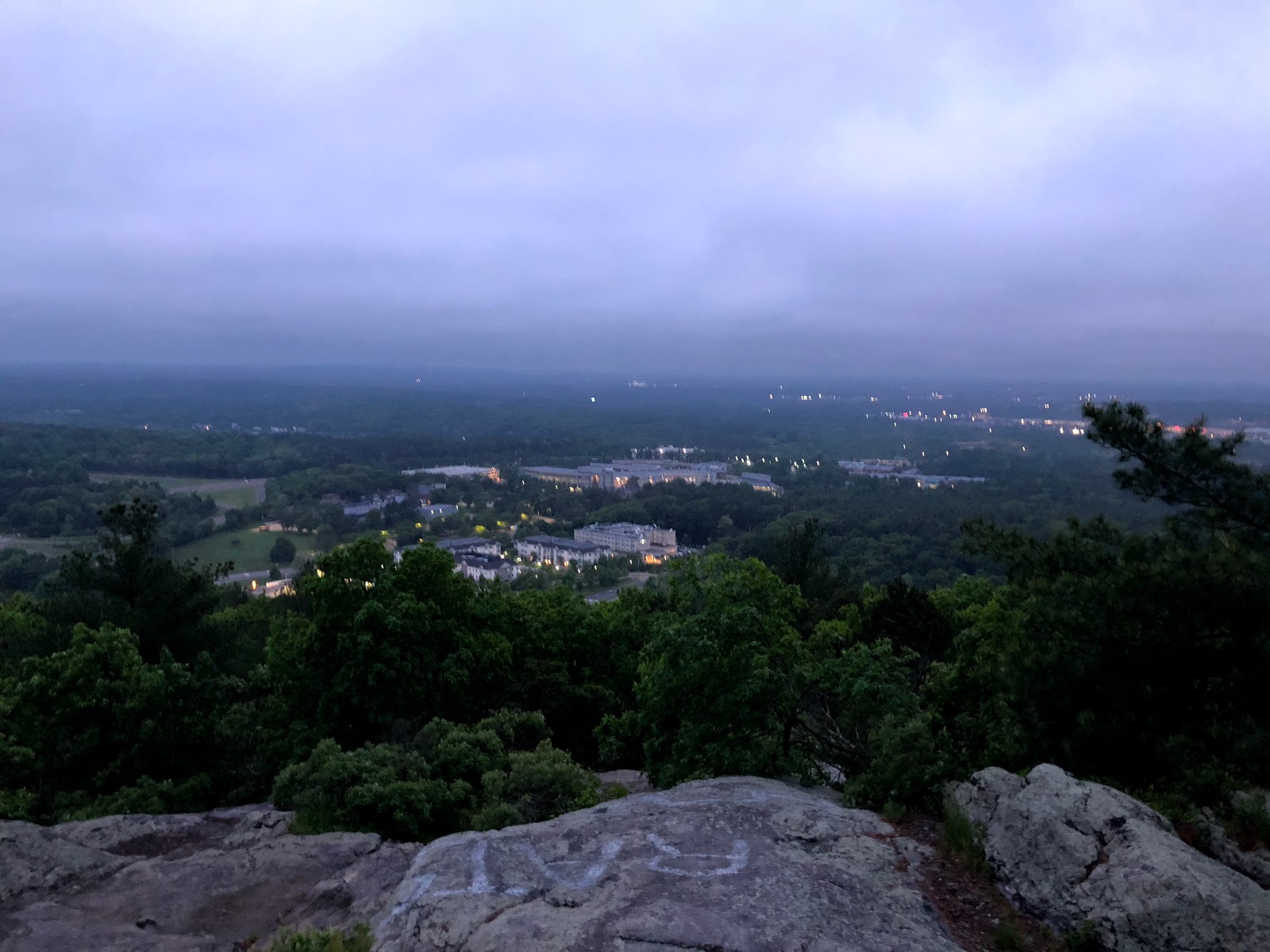
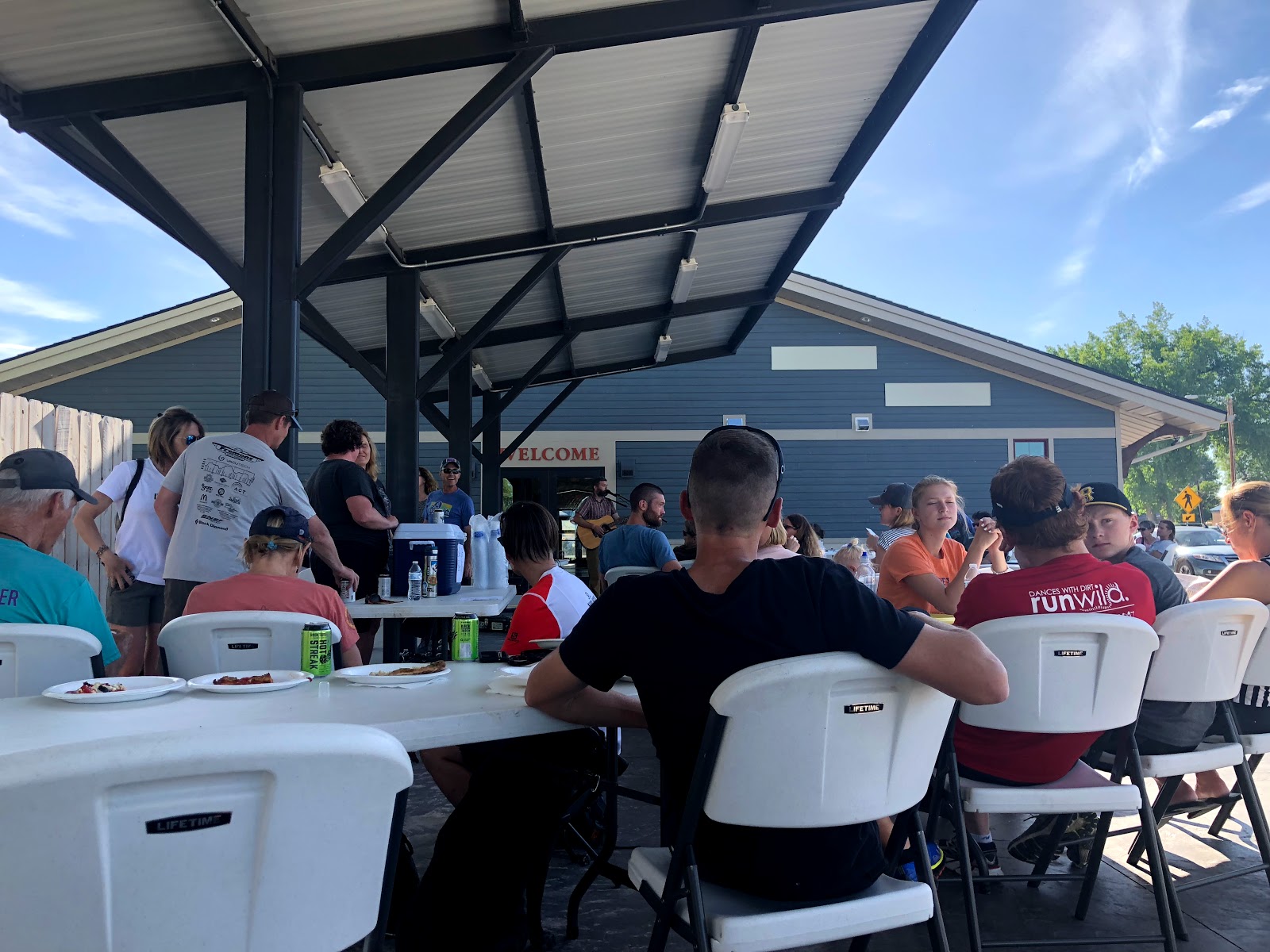
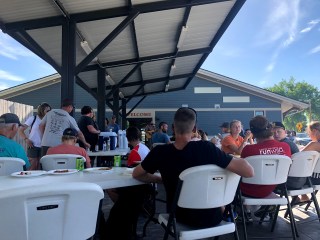 We walked around town that first day in the oppressive sun. There are plenty of stores there to get stuff to prep for the race. The race directors run a sporting goods store and shoe store on Main Street and they are really well stocked. There are two breweries in town but neither serve food instead relying on food trucks parked nearby. We had Mexican for lunch which was fine. For dinner we went to a talk by Jennifer Phar Davis in Dayton and ate Pizza from a food truck there.
Thursday after a great streak-maintaining 5 mile run, partially with Pete, along a trail in Sheridan we had some hotel breakfast (bagels, waffles, yogurt) and then headed to the race start to check it out. It was slightly cooler but still cloudless and hot. We chatted with one of the race volunteers about the course and he said, with a smile, it should be dry barring rain and told us to dress warmly for Jaws given how cold it could be up there. We then drove the few miles down to the finish in Dayton. Shawn, who ran the race last year, warned me that this road was long on race day coming at the very end. It seemed innocuous enough in the car. We drove into the park where the race finished and saw the finish line. We chatted with another runner there, Aaron, who had run it 5 times previously. He also said the road part sucked. Pete and I debated how much we would hate this section and I came down firmly on the side of potentially misery.
We drove back to Sheridan and went to Ole’s for some lunch. This was the restaurant where the pre-race dinner would be. I risked the buffet which included salad and pizza. We then met up with Doug, Amy, Owen and Eleanor. They had spent three days driving from Wisconsin and were staying in a cabin up in the Bighorn Mountains off route 44. Doug repacked his drop bags and Pete and I, now experts having spoken to two people and finalized our preparations that morning, reviewed his plans carefully.
My plan involved starting in the most minimalist vest and the Hokas with my poles. In Foot Bridge (mile 30) I would change into a larger vest already packed with nutrition, warmer clothes and my headlamp. I would also change shoes to the Salomon Amphibs because they were designed for the mud with the intention of switching back to the Hokas on the way back through Foot Bridge (mile 66). After hearing how dry it was on course from the race volunteer, I decided to switch the Amphibs for my Ultras given that they had a bit more cushioning. At Jaws, mile 48 and the next drop bag, I planned on just having additional warm clothes, more nutrition, and an extra headlamp battery. At Foot Bridge on the way back I would change shoes, and grab the third vest, a slightly more substantial one than the first again pre-packed with nutrition. At Dry Fork, the drop bag aid station at miles 13 and 82, I just had nutrition and the Amphibs in case I was hating the Hokas for the way back. Nutrition at each drop bag always involved two Maurtens, 4 GU Brews, and 6-10 gels, waffles, or Scratch Lab gels depending on the distance/time to the next drop bag. I put my phone and earphones in the vest for the way up out of Foot Bridge anticipating that I might want to listen to something.
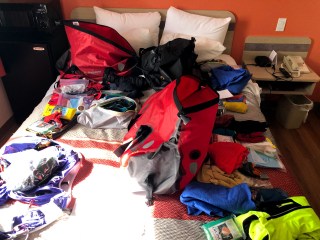
With perfect drop bags in tow, and no phone for me, we headed to big pick up and bag drop off (three blocks away in Sheridan). The bib pick up was fast and easy with a simple medical form and signing of a waiver. We got a nice swag bag and after dropping off the drop bags, we headed over to the sporting good store to pick up some additional free goodies. We then headed back to Ole’s for an early dinner. The runners got a free buffet and I once again ate a ton of veggies but this time added some pasta. Doug and family headed up to the mountains and Pete and I headed back to “Motel 6” for an early bedtime.
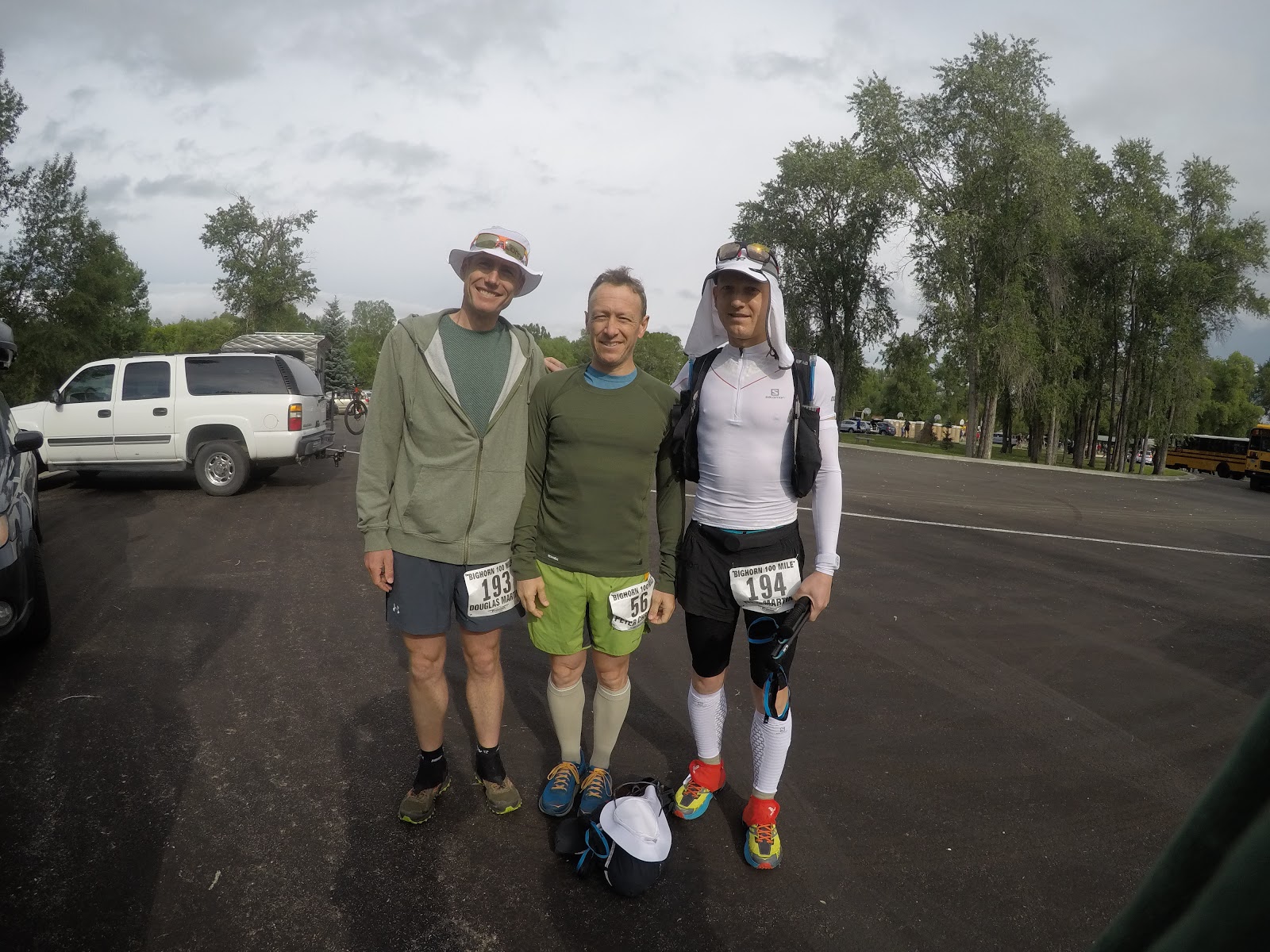
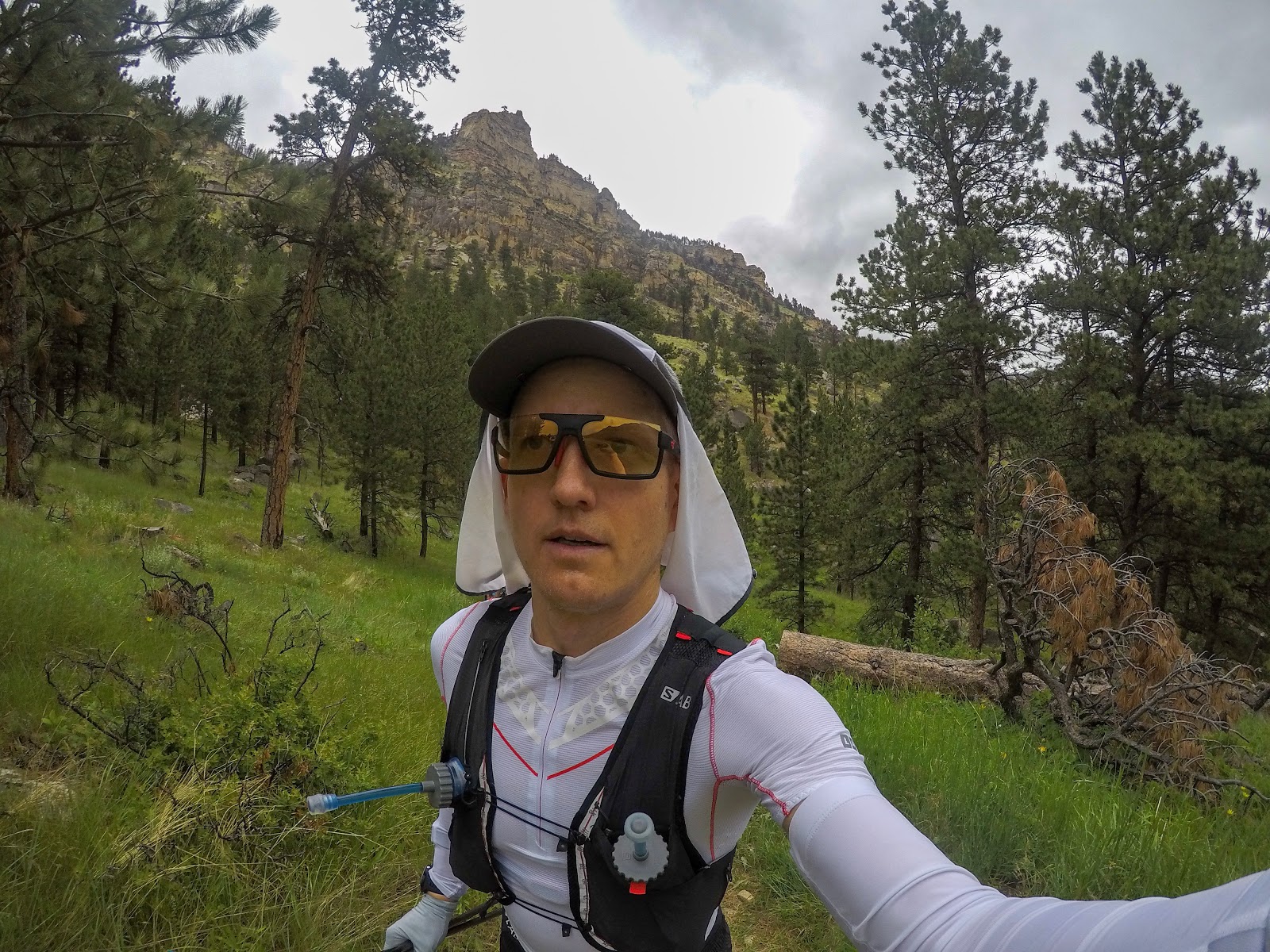
Lights out for me around 7:30 and I started waking up around 3:30 and then tossed and turned until 5:30 or so. I felt rested and ready to go. Pete and I were planning to get to the park a bit before the 8 am but were both ready by 6:45 or so and we headed over early. I showered, got on the anti-chafe stuff and got dressed. Hoka Speedgoat 2s, Darn Tough wool socks, never before used Salomon gaiters, Salomon calf sleeves, Salomon compression long tights to near my knees, Salomon shirt, OR hat with “mullet” material to cover my ears and neck, sun glasses, arm sleeves for the sun, and OR sun gloves. I looked like a billboard for Salomon, as someone pointed out at the start, but I felt confident in the outfit.
We met Doug and family at the park in Dayton for the race introduction. There were some brief remarks from the race director and then the course director who I later learned as the father of one of the residents in our training program in Boston described the course in detail. It was a cooler day for sure and a bit cloudy at that point.
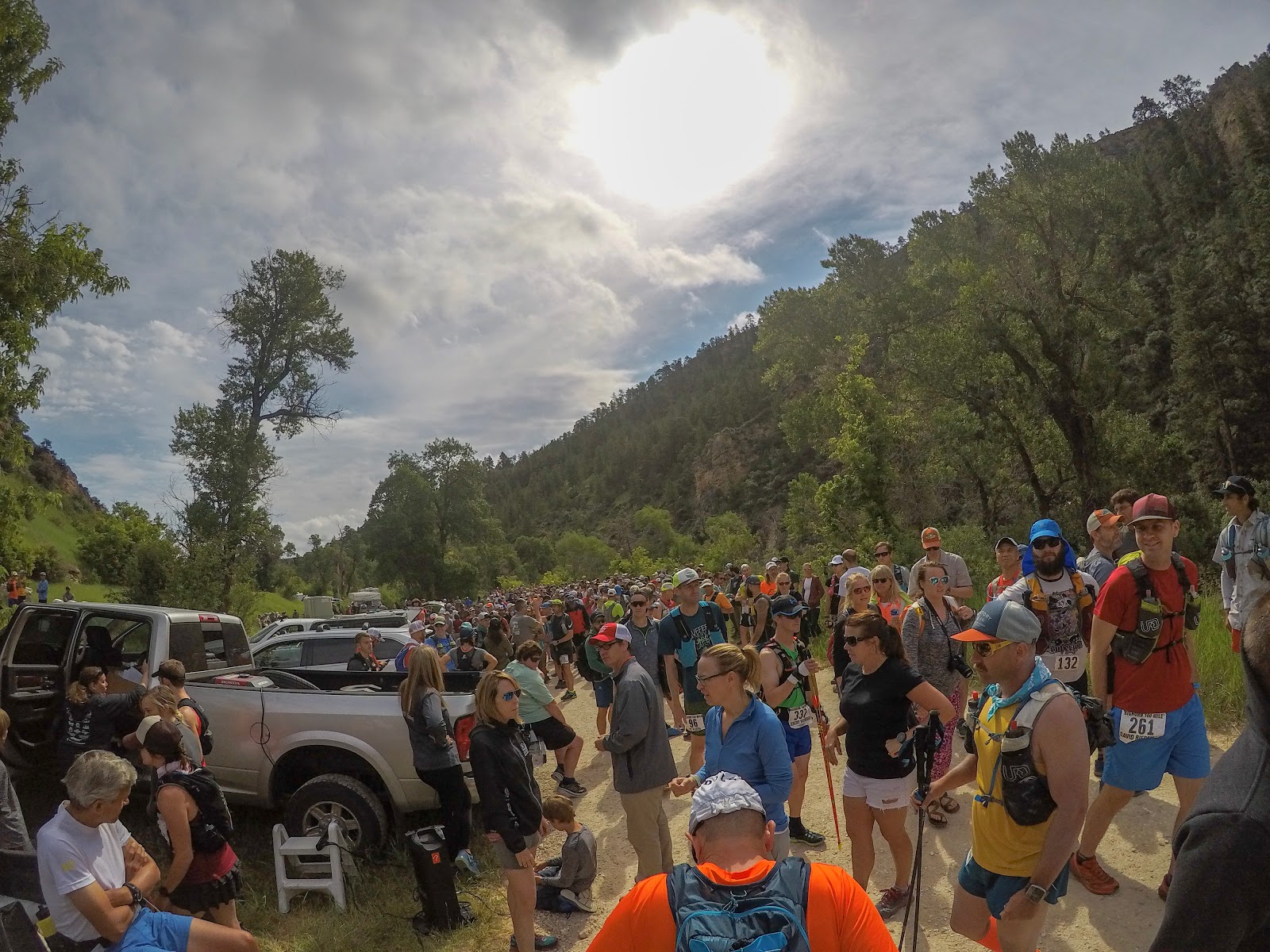
Following the remarks, our band of 6 boarded a school bus and got a ride the few miles up to the start. Once there, we had more than an hour of waiting and sat on a wooden bridge over the Tongue River. By then the sun was coming out but it wasn’t hot. With about 15 minutes to go, we assumed our places near the start. Doug headed toward the back for what he planned as a slow climb to the turnaround at Jaws to avoid the ever-lurking vomit monster who has stalked his prior 100 mile attempts. Pete and I headed towards the front aiming to be in the top 100 – for unclear reasons. My plan was to stick with Pete for as long as we both felt about the same and then to take off if I was feeling good or let him go if I was a mess
. We had discussed a heart rate “governor” with a max of say 145 or 150 as a way of keeping things under control. A short prayer was given and the national anthem played and at 10 am on June 15, 2018, we were told to, “Go!”
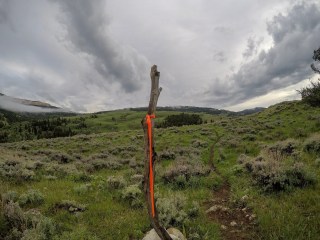
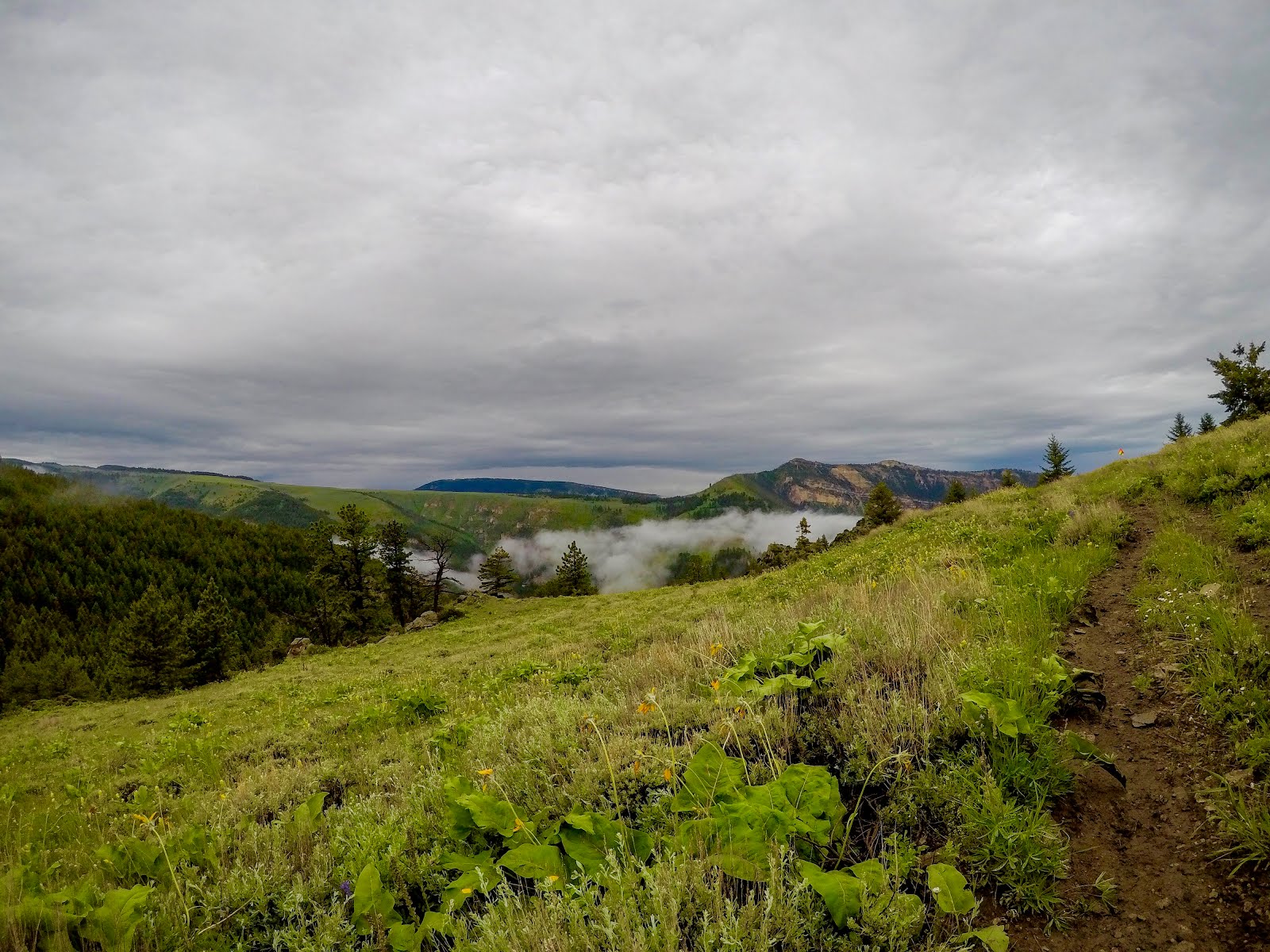
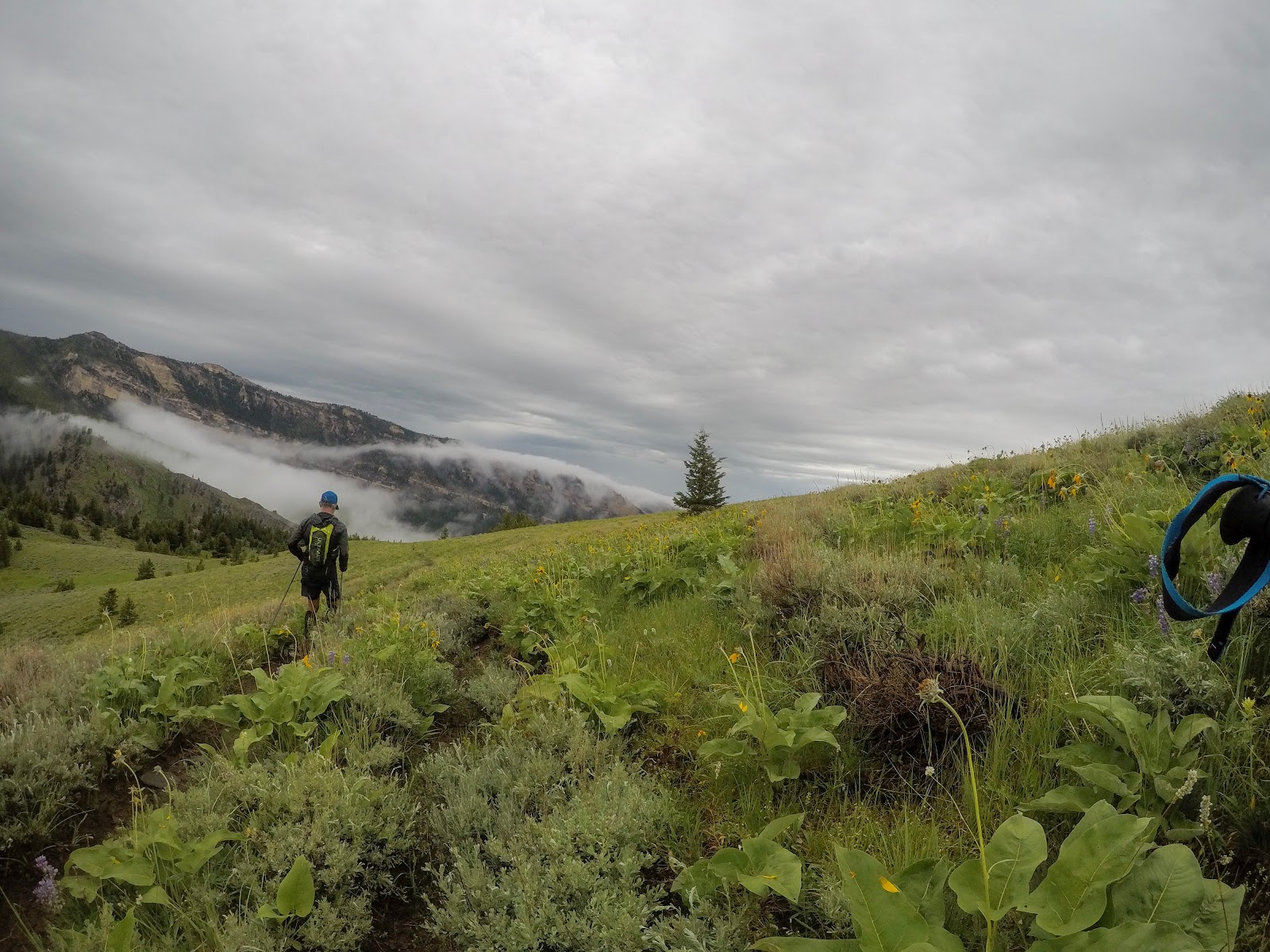
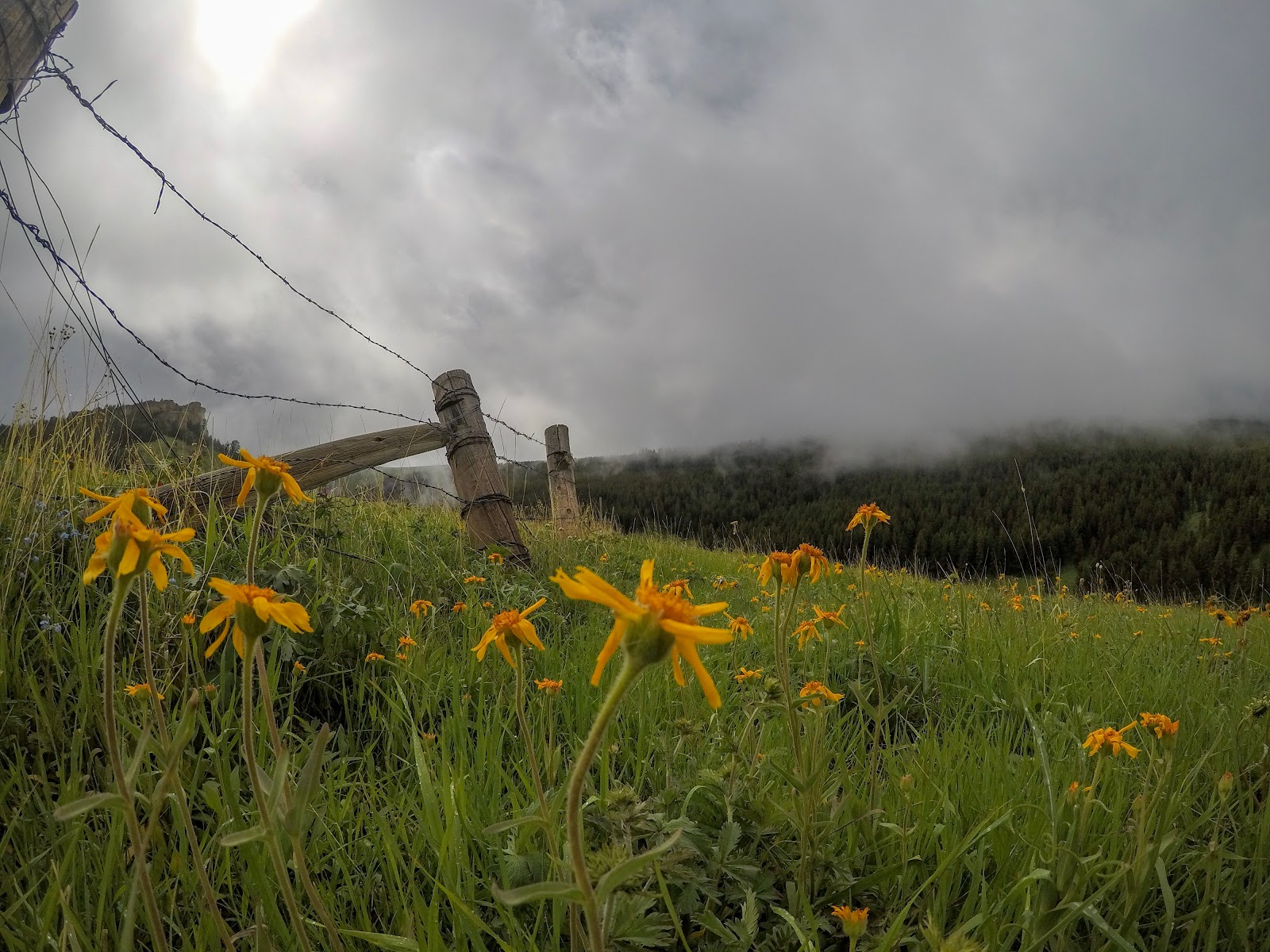
The first 1.25 miles is up the dirt road and we took it easy here getting passed by groups and waving to the drones overhead. We passed the aid station at the trail head without stopping and headed up the start of the single track. I was just in front of Pete and I just tried to keep up with the person in front of me. There wasn’t much talking in that line and we only had people passing us. At mile 3.5 there was another aid station and I got more water for the next steep climb. We started to climb up and out of the canyon to open meadows with yellow and purple flowers. There were very steep sections but the line moved at approximately the right pace. The views were impressive looking back but soon we were in the clouds and visibility decreased. The trail was dry and while there was some distant thunder, there was no rain. We followed a barbed-wire fence, maybe too closely, and eventually came over the top of a ridge and dropped down with the first running in a while to the Upper Sheep Creek aid station at 8.5. This was the first time I could easily pee and I refilled water bottles.
At this point we started to hit some dirt roads and there were some runnable sections. There were a few points where it was easy to get off trail but mostly we could just stick with folks into Dry Fork at mile 13 and the first drop bag. I had been good about getting 300 calories in every hour and on the climb while my right hip flexors were hurting in their typical way, I was otherwise feeling pretty good. I got into Dry Fork at 1:03 (3:03 into the race) and got out 5 mins later having just grabbed some new gels from my bag. In all the drop bag aid stations, the volunteers basically had the bag ready for you by the time you got to the fence.
There was a lovely downhill out of Dry Fork on a road and it was entirely runnable. I pointed out to Pete that the poles were fine but totally inessential up to this point. I started chatting with some other runners and learning about their experiences with race from past years. I spoke with a runner from Powell on the far side of the Bighorns and he said this section on the way back was a real challenge. I started to pull ahead to Pete and as I was feeling under control, figured I’d stick with it. I rolled through Cow Camp at mile 19.5 and again just had water refills. Somewhere in here I tried to fill my bottles with Maurten but it proved hard to dissolve in the cold water. Over the next 7 miles it started to rain lightly – out of nowhere. By this time we were back on single track and with just a few drops of rain, the mud started to form. It was immediately comical as it stuck to my shoes and they went from lightweight to heavy in a matter of steps. Most of the group I had been running with stopped to put on jackets but I was perfectly comfortable in my sleeves and just kept going leaving that little group behind.
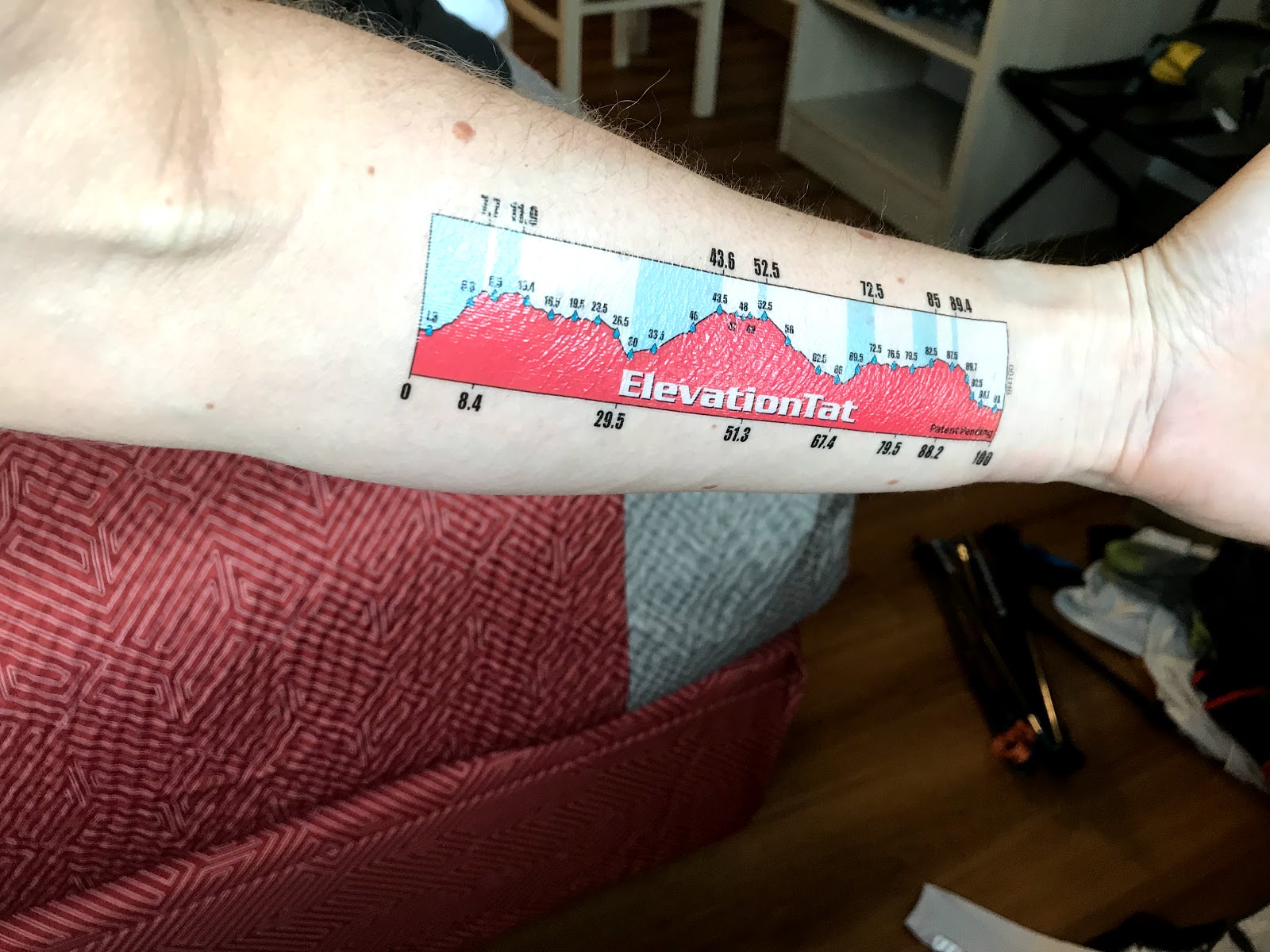
At Mile 26.5 I got some more fluids from Bear Camp and joined up with a runner from France and one from New York. We chatted about prior races including the challenges of UTMB last year as the rain petered out. At this point there were collections of hail here and there suggesting our rain had been hail just a few miles in front of us. We dropped out of the trees, through a notoriously deep section of mud, and onto a spectacular single track traversing across a postcard like meadow overlooking the Little Big Horn canyon. I knew from the map that Foot Bridge was far below. It was so beautiful and we were a bit giddy resulting in some yodeling and picture taking. I moved ahead and dropped through an increasingly muddy and slippery section down into the canyon and the clouds. Without much warning pea to marble sized hail started to fall. It was pretty warm and this was a runnable section. Believing that this was going to be a memorable moment, I turned on the GoPro and recorded myself running through the hail. I found it more amusing than scary and I passed someone waiting under a tree for the hail to stop. Within a few minutes I was down the river and crossing the metal Foot Bridge right into the aid station and my next drop bag; mile 30 and hour 6:39. I had spent a lot of time before the race trying to understand what my pacing might be and when I would get to various aid stations. I had a set of times for a sub 24 hour, 26 hour time and a 32 hour finish. As this was my first 100 and I did not want to get caught up in chasing times and having to quit, I focused only on effort and was not worried at all throughout the race about time goals. Regardless, I was about 6 mins off the arbitrary 26 hour time at this point.
 As the rain and hail was finishing up, I grabbed my drop bag and found a dryish spot under one of the tents. I had decided to take Pete’s advice and not sit as sitting would lead to some activation energy to get going again. While a volunteer filled my bottles, I grabbed my new vest with the warmer clothes, transferred over my rain jacket (still in a ziplock to keep dry/light), and headed out. Eight minutes in this aid station. As the Hokas were working great, I decided not to change shoes or socks.
I started out of Foot Bridge in front about about four guys. The trail here hugs the river and goes up and over a few sections as it makes its way along the river. There was a ~200m section of recent rockfall which had caused some concern for the race but was a total non issue for running. My gaiters had come up off my shoes and I stopped to adjust them letting the others by. This resulted in mud covered hands but I wanted to try to continue to use them. Soon after, one and then the other began to come un-velcroed and I just took them off and stuffed them in the vest. I didn’t have them the rest of the race and wasn’t bothered in the least. Pete afterwards said he ended up stopping several times to get small stones out of his shoes but I just didn’t have that issue.
I caught back up to one of the runners I had left Foot Bridge with and tried to stay with him on the way up. He was going slightly faster than was comfortable and I began to get a little bit lightheaded. Wanting to stick with this runner, I used both the tools I had to address feeling off at all: I drank more water and ate two waffles. Within a few minutes I was feeling better and we climbed together out of the canyon though the afternoon. As others pointed out to me, the whole day had felt somewhat like a prolonged twilight and this section certainly did. We climbed out of the clouds and ran through meadows through a now wide canyon. This was a muddy but not terrible section. The first aid station out of Foot Bridge comes after 3.5 miles and is called Cathedral Rock. These volunteers had to backpack in the supplies. As usual I just grabbed water. I also asked whether I was supposed to be sore by now. Another runner, taking the question more seriously than I had intended, looked concerned and told me that no, I should be feeling pretty good just a 1/3 of the way through the race. The next aid station was Spring Marsh, another 6.5 miles up the trail. This was out in the open and had a fire going. By the time I made it here, I was starting to bounce between runners. Over the next 3.5 miles to Elk Camp aid station at 43.5, we crossed more steeply an open face. It was here that I began to see the first 100 milers coming back. They looked fresh and happy and I tried to be positive with each. There were very runnable sections through this climb to Jaws and the mud was only bad intermittently. I ran with the then second place female runner for a while and as we approached the end of the climb, with a runner from Iowa. I had committed to staying positive throughout the race and found it easy to do so as others fretted about slower running than anticipated and the mud. Of the things I did well, including clothing choices and spot-on nutrition, I think that dropping a specific time goal was really important. I gave me no framework for being frustrated about the conditions. Like the Boston Marathon, I was conscious to only be worried about things I could control and that fighting with the weather was for me, a fools errand.
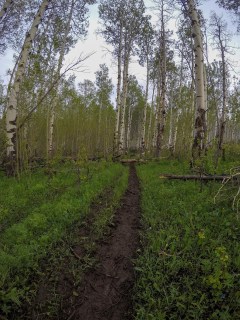
I remained out of my rain jacket and warmer clothes as we climbed about 8,000 feet. My hands were getting a little chilly as real dusk came but otherwise I felt fine. I hit the plateau before jaws thinking it would be all marsh and flat. Instead it was only intermittently marshy and there was more uphill than I was expecting. By 9:30 it was dark enough for me to want to use my headlamp. As we got closer to Jaws, it became much more runnable and I ran the last mile or so, now alone, into Jaws.
Jaws was more or less what I thought it would be. There were a lot of cars and crews around. The tent was warm and after grabbing my drop bag, I began to reload my nutrition for the way back. Many people had emphasized just getting out of Jaws as quickly as possible. The volunteers asked how I was feeling, was I nauseous and when was the last time I had peed. While I had been a bit nauseous and feeling on the edge of a headache on the way up, I drank as much as I could and continued to use GU and the maple syrup. The result was that I was peeing twice an hour at least. Thinking I would be chilly on the way back down, I put on gloves, a wool beanie and my warm top. I hit the porta potties on the way out and had left Jaws, mile 48, after 12 mins. It was 11:53 into the race; about 20 minutes behind the middle time on my pace chart.
I ran out of Jaws looking forward to picking up the pace a bit on the way down. One of the few mistakes I felt like I made in the race was how I dressed for this section. I was immediately too hot and while I took off the gloves and hat, didn’t want to stop to take off the fleece jacket. I was looking at each runner who was climbing to find Pete and Doug. Not too far out of Jaws I passed Pete and we chatted for a bit. He was clearly at a low point without a working GPS watch and frustrated about the mud and timing. I headed back down and at Elk Camp, I found Doug by the fire. He looked great but said that the vomiting had already started for him so he was going to hang out and try to get better. He ended up spending two hours in Jaws trying to rest before getting pulled at the 4 am cut off and heading back to the cabin he was staying in with Amy. I charged my watch for about 40 mins coming out of Jaws and got it back to about 90% charge.
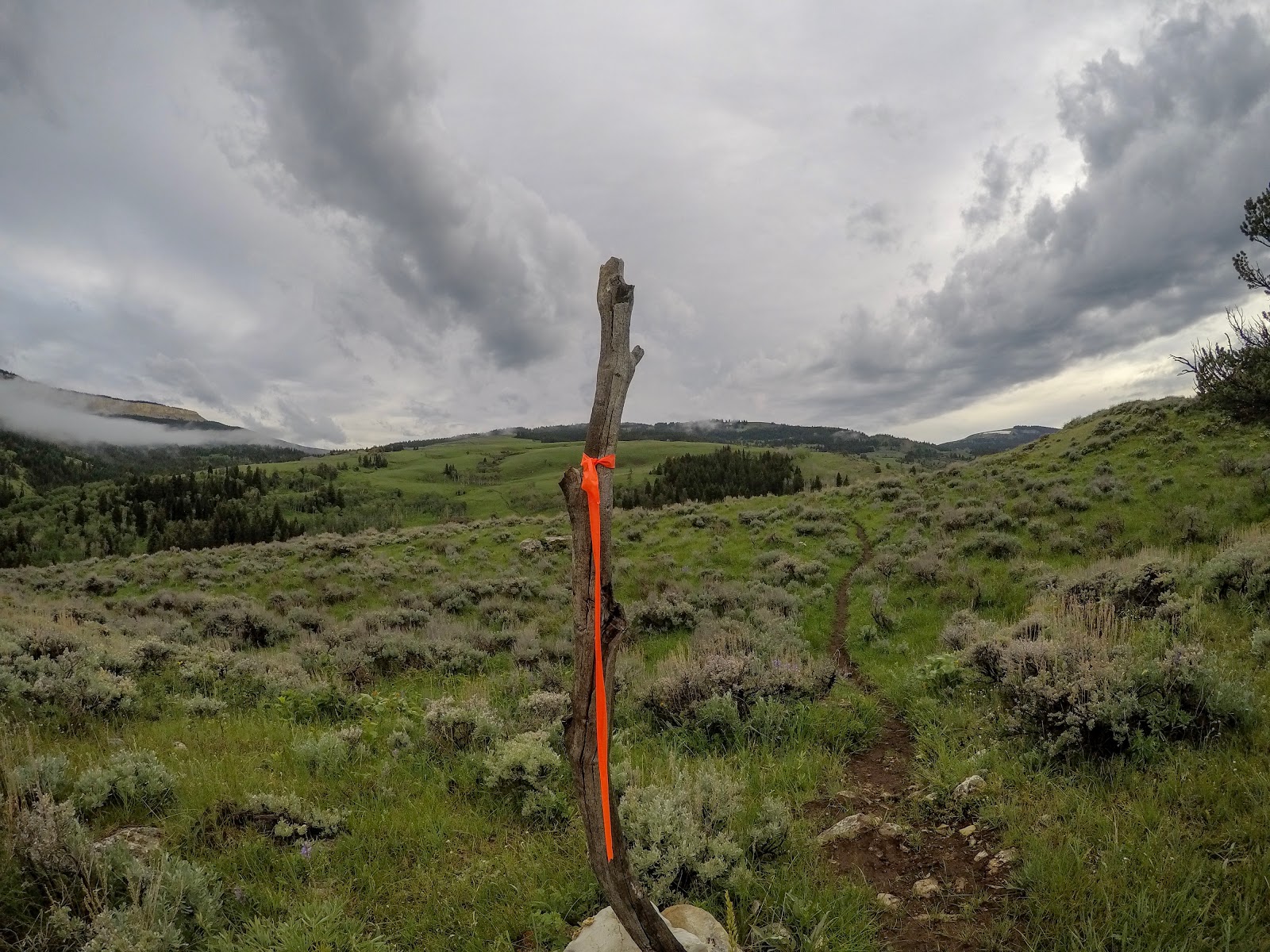
I ran about half of the way back to Foot Bridge by myself. It had started to rain lightly at around 11:30 pm and this continued for several hours. It was dark and there were increasingly few people coming up. The course markings were glow sticks and I found that I got frustrated with these. I could see them in my peripheral vision but when I shone my headlamp at them, they became less visible. Upon reflection, it seems silly to have been frustrated by this as I was not having any way-finding issues, I just wish they had used more reflective tape – even on the glow sticks. I was passed by a runner from Memphis who had no poles. He fell several times as he passed me and commented how much he wished he had poles. I was making my way more slowly and was embarrassed by how much slower I was on downhills. I ran alone again for a short while and then saw the guy from Memphis ahead. He had slowed to wait for me and said that he was sick of having to concentrate to much and wanted to run behind me. This was great as I became more focused on picking up the pace. We chatted a bit was we made out way down past Cathedral Rock and into Foot Bridge. This is mile 66 and I arrived at 3:16 am, 19 hours into the race. I was about 40 mins behind my middle guess on pacing. 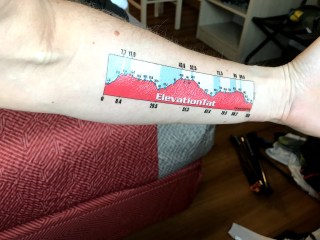
With an eight minute turn around, I grabbed my final vest, transferred over my phone, headphones, and rain jacket – to date unused. I also grabbed my sun hat with flaps and left behind my too-warm jacket. I had been noticing that I was stubbing my toes more than I liked and each time was excruciating suggesting some blisters under the big toenails. I also felt like I might have a blister on the lateral aspect of my right big toe. None of this was enough to want to change shoes with my logic being that I had more confidence in the horse that got me here. I also didn’t like the idea of how much time it would take to change. One thing I forgot in this drop bag was my sun glasses. I do not love my sun glass carrying strategy during runs and probably should figure something out.
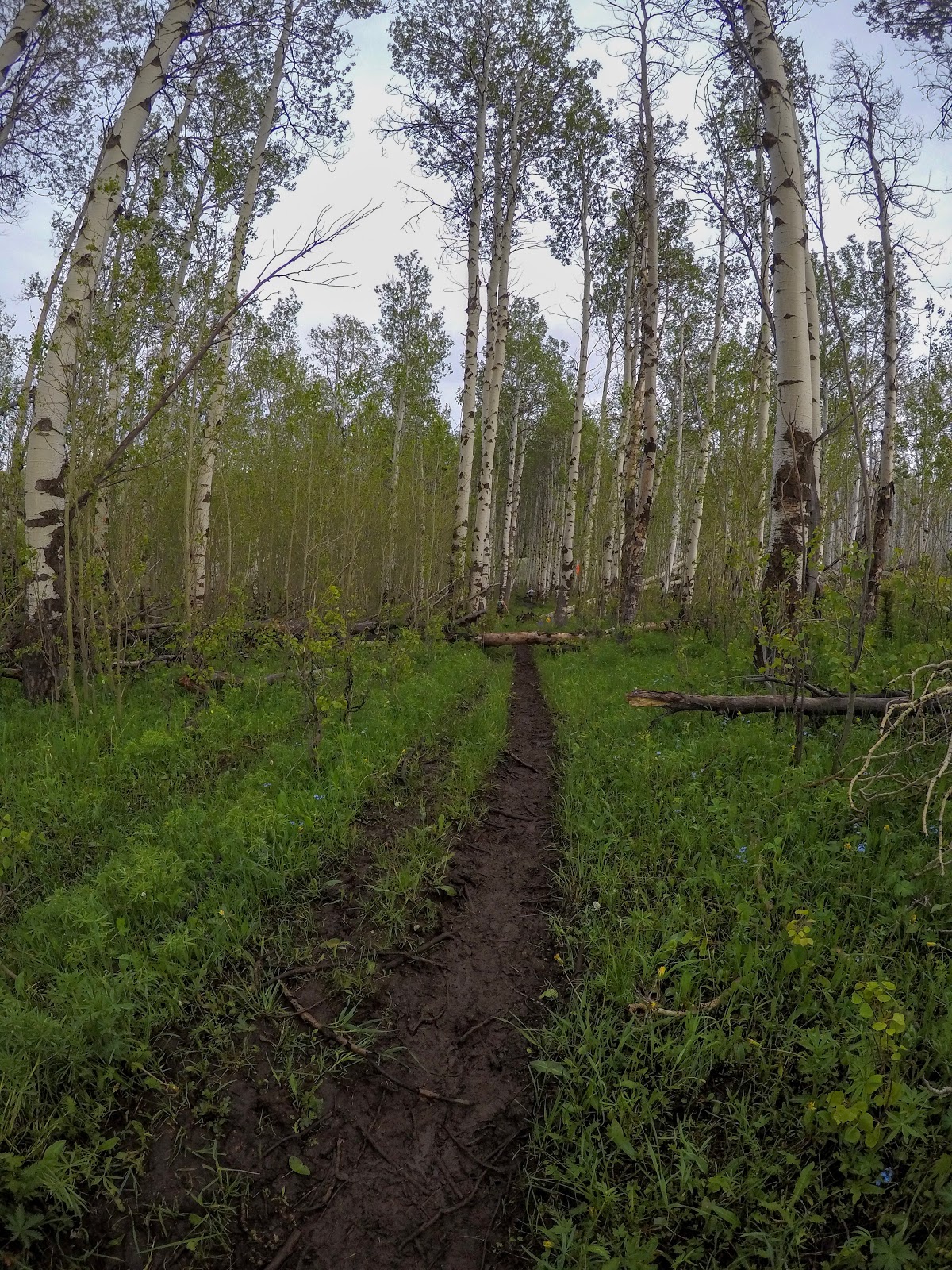
With this fast feeling turn around, I left Foot Bridge amongst a group of a few runners who had pacers. I knew “The Wall” was coming and that it would be muddy for the 2200 foot climb back up to Bear Camp over 3.5 miles. This section was again muddy with as much backsliding as moving forward but my attitude was that it was was it was and there was only one direction to go. I had noticed that as night fell, I had begun to think of the race as somehow being in the bag. This manifested itself by me writing my strava title and post in my head. I had to continually remind myself that I was far from done and that the hard part after mile 70 was yet to come. Though I was hiking at a good clip, a runner and his pacer passed me easily. I caught them at the Bear Camp aid station (mile 69.5) where they were hanging out and they soon passed me again on the far side of the stop. This early morning section was a little dream like as I felt like I was on an entirely new course. It was totally cloud covered as dawn broke and running totally alone, the course was just unfamiliar. It was easy enough to follow the path and the course markings but I just felt like I could be in some other race entirely. I put on my headphones and listened to podcasts for a few hours. This section had been advertised as challenging and upon reflection, I somehow got into a slow moving funk all that morning. I just found it so comfortable to walk that I was running less even over what would have been runnable terrain. In part, I think the fog made it hard for me to tell completely whether this was a little incline, flat, or a little decline and because I was allowing myself to walk every incline, I just walked.
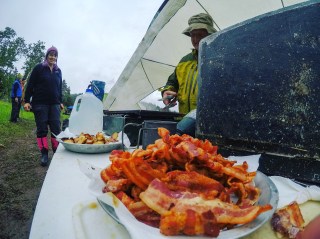 The next aid station was Cow Camp at mile 76.5 and this was a long 7 miles for me. I was feeling essentially pain free and not bad physically, I was just moving slow with a low heart rate. I recharged my watch again just to be sure it would capture the whole race. During this section, I became convinced that I would finish even if I had to walk it all the way in. Cow Camp famously is the bacon aid station but as usual, I decided to not eat any real food and just stuck with my Gels and liquid nutrition. At this point, I was using less Maurten as it wouldn’t dissolve and mostly drinking their GU Brew. This was occasionally full strength and occasionally not. I sometimes added my own GU Brew. I stopped getting 300 calories an hour in but still was getting ~200. Cow Camp to Dry Fork and my last drop bag was on a dirt road and the walking continued for me. The runner and his pacer whom I had left Foot Bridge with were far in the distance and it was on the final climb that I met another first time 100 mile runner. We power hiked into Dry Fork in the midst of a supportive crowd. I was handed my drop bag but didn’t need any nutrition and just filled my bottles and headed out (4 min turn around). I arrive 22 hours and 42 mins into the race; this was mile 82.5.
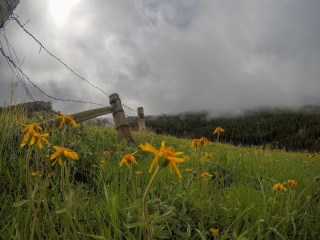 Again with a fast turn around, I left alone and hiked up to the top of a ridge along a dirt road. The next section became more runnable but I still walked more than I thought I should. At this point, I was back in the cloud and it was very chilly. The 5 miles to Upper Sheep Creek aid station were again disorienting as I was totally alone and the course markings were less frequent. Following that aid station, we hit the steeper down hill along what was now a very muddy and wet path. As I made my way down gingerly, the first of the 30k runners bombed past me at what felt like irresponsible speeds. I really couldn’t believe how fast they were running on very slick trails. I physically felt fine but was still stuck in this mental rut of having to be careful and to keep the running slow. After a few more 30k and then the beginning of the 50k runners passed me, the clouds began to break slightly. Finally I was passed by a 100 mile runner, the first time I had been passed since Foot Bridge (this may or may not be true). That shook me out of my funk and I decided I would run with him. All of a sudden we were really running and I felt great. No hip pain, no hamstring pain, no pubic bone pain. Just running. I held my poles in my hands and just went along for the ride. We continued to be passed by the racers from the other distances but not at such an embarrassing rate. We cruised through Lower Sheep Creek where again I got water and nothing else. This was mile 92.5 and mentally I was already mentally practicing crossing the finishing line (would I cry? should I take off my hat?). I stuck with the guy who had passed all the way to the Tongue River Trail Head aid station at mile 94.8 planning to see how fast I could run the road. He stopped for a bathroom break and I just kept running.
This section is a dirt road which gently rolls down out of the canyon and down to the river in Dayton. I was prepped for this being long but figured at my fast running pace, it would fly by. It did not fly by. I ran 8-9 min miles through this section which felt great. But it felt great for a little bit too long. I was done with nutrition. Done mostly with drinking. Done with taking care of myself. This was just about getting to the finish line. There was an impromptu aid station with popsicles by someone’s house but I wasn’t slowing down at this point. The sun was just coming out but it was not hot. I was doing the math from my watch and figured I was going to need to run beyond the finish line to get to 100 miles (I really needed the watch to read 100 miles for some reason). So I spent more time working through the logistics of not looking like a crazy person as I kept running beyond the finish line. There was a Home Stretch aid station with two miles to go and many well intentioned people along this section told me I was close. Finally I really was close and I took a right across a pedestrian bridge over the river before a left across Highway 44 and down the street and a left into the park. I had seen this area the day before and in videos. I saw a 100 mile finisher about 300 m in front of me and the crowd was encouraging me to sprint but I jut ran it in at my regular pace. I felt like I was going to cry in those last few hundred miters not because I was in pain but just because it felt consequential. It felt like something very real. I saw Doug and Amy and turned the corner to cross the finish line. The watch was exactly at 100 miles, it was 12:43 pm and I finished at 26:43:29.
I was 29th overall and 11th in my age group. I had moved from 95/292 at Dry Fork, to 84/278 at Foot Bridge, to 64/268 at Jaws to 48/190 at Foot Bridge to 137/155 at Dry Fork (which must be wrong in the numerator). I sat with Doug and Amy and initially felt good as we took off my shoes and socks. I drank some water and then felt like it took all my concentration not to throw up. I retched a little but nothing came up and it soon passed.
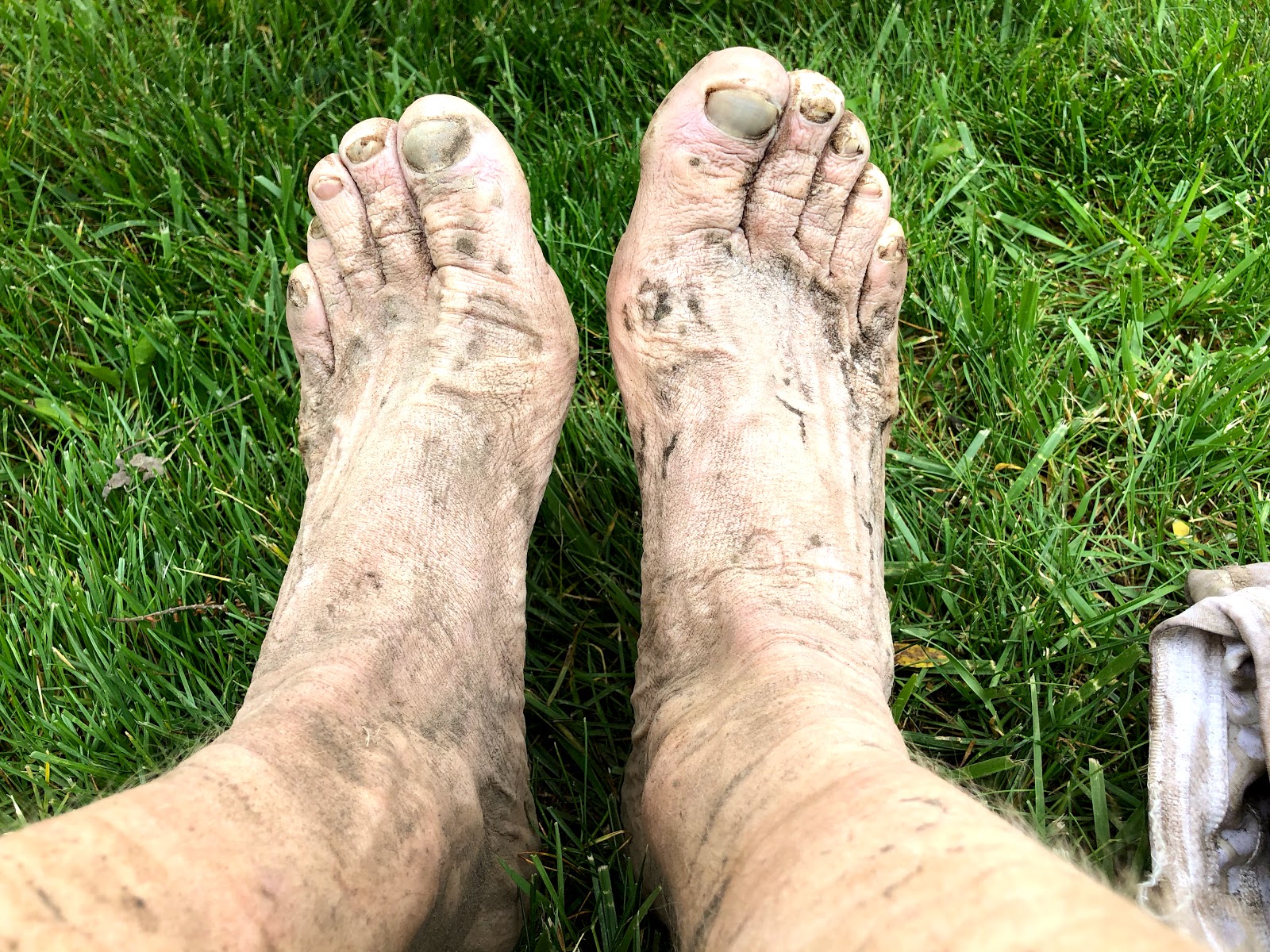
I did have blisters on the lateral side of both big toes – a new and unexpected location. I did have blisters under 2-3 toenails on both sides. I never did have much hip, groin, adductor, or hamstring pain. My feet never really hurt other than when I stubbed my toes. Clearly I had preserved enough energy to pick up the pace at the end.
Sunday night, my feet began to swell up to the mid calf. My ankles got huge and my blisters under my big toenails became increasingly painful. Tight socks and compression sleeves helped through Tuesday and by Wednesday, things had more or less normalized.
Things I got right:
- nutrition: a mix of drinks and gels, waffles, and maple syrup
- clothing: calf sleeves, arm sleeves, thigh-length compression, sun hat were all perfect for the cooler rainy conditions
- Aid station: I was prepped with note cards to myself and a lot of pre-planning; the result was quick turn arounds
- hydration: I was a hydration champ; my ankles assured me for days afterwards
- Poles: the poles overall would have been unnecessary in dry conditions; in the mud they were extra points of contact and were great
Things I may have gotten right:
- Pacing: who knows but I had enough in the bank to run at the end; there was more walking than I would have liked after it got dark (I now understand the role of a pacer)
- Shoes: while my feet were a little beat up, I’m not sure it would have been better had I changed shoes – there is a risk to that; I loved the cushioning of the Speedgoat 2s and never felt like grip was an issue
Things I need to work on:
- Overly warm: my fleece was too hot for the way down from Jaws
- Sunglasses: need a case or something to carry them in
- Bags: the dry bags I have are huge (50L) and they were great other than having to bring them to the race
Bighorn Takeaways:
- It was every bit as scenic as I wanted
- The elevation gain and overall elevation is totally manageable coming from sea level
- Foot Bridge to Jaws has plenty of sections you can run on the way up and down
- Foot Bridge to Dry Fork is challenging given the rolling hills and overall up hill
- The final miles on the road are mentally challenging
- Great volunteers and organization. The drop bags were in my hands before I knew it and back at the finish line plenty early.
- Have waterproof drop bags because they are out in the rain
- Despite the large crowd at the start, things thin out dramatically and you may run alone for many hours
Thanks:
As much as we try to justify it, training for this sort of things puts a stress on your life and relationships. The biggest thanks of course goes to Jenn for allowing me the opportunity. Thanks to the kids though they weren’t exactly given a choice. Many thanks to Pete for suggesting it and getting me through the prep and logistics. A special thanks for Doug for introducing me to this craziness and for coming out to run this as well. Thanks to Shawn for his wisdom and support. Finally, thanks to the Cambridge Sports Union running club folks – I know this is at the extreme of normal but your support was invaluable. To the Bighorn organizers and volunteers, you did everything right and I cannot be more appreciative.
44.875246
-107.262302
 We walked around town that first day in the oppressive sun. There are plenty of stores there to get stuff to prep for the race. The race directors run a sporting goods store and shoe store on Main Street and they are really well stocked. There are two breweries in town but neither serve food instead relying on food trucks parked nearby. We had Mexican for lunch which was fine. For dinner we went to a talk by Jennifer Phar Davis in Dayton and ate Pizza from a food truck there.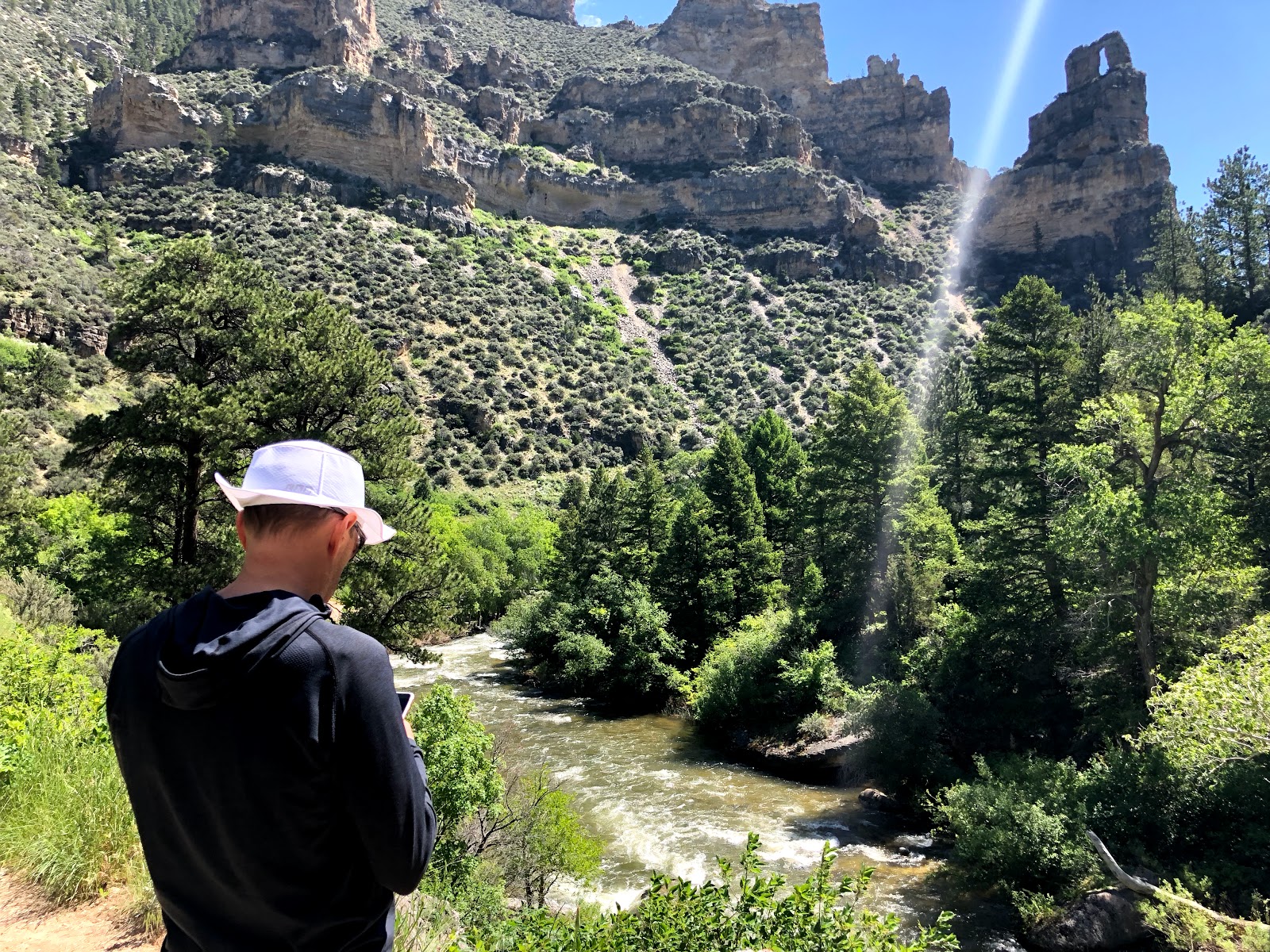
 As the rain and hail was finishing up, I grabbed my drop bag and found a dryish spot under one of the tents. I had decided to take Pete’s advice and not sit as sitting would lead to some activation energy to get going again. While a volunteer filled my bottles, I grabbed my new vest with the warmer clothes, transferred over my rain jacket (still in a ziplock to keep dry/light), and headed out. Eight minutes in this aid station. As the Hokas were working great, I decided not to change shoes or socks.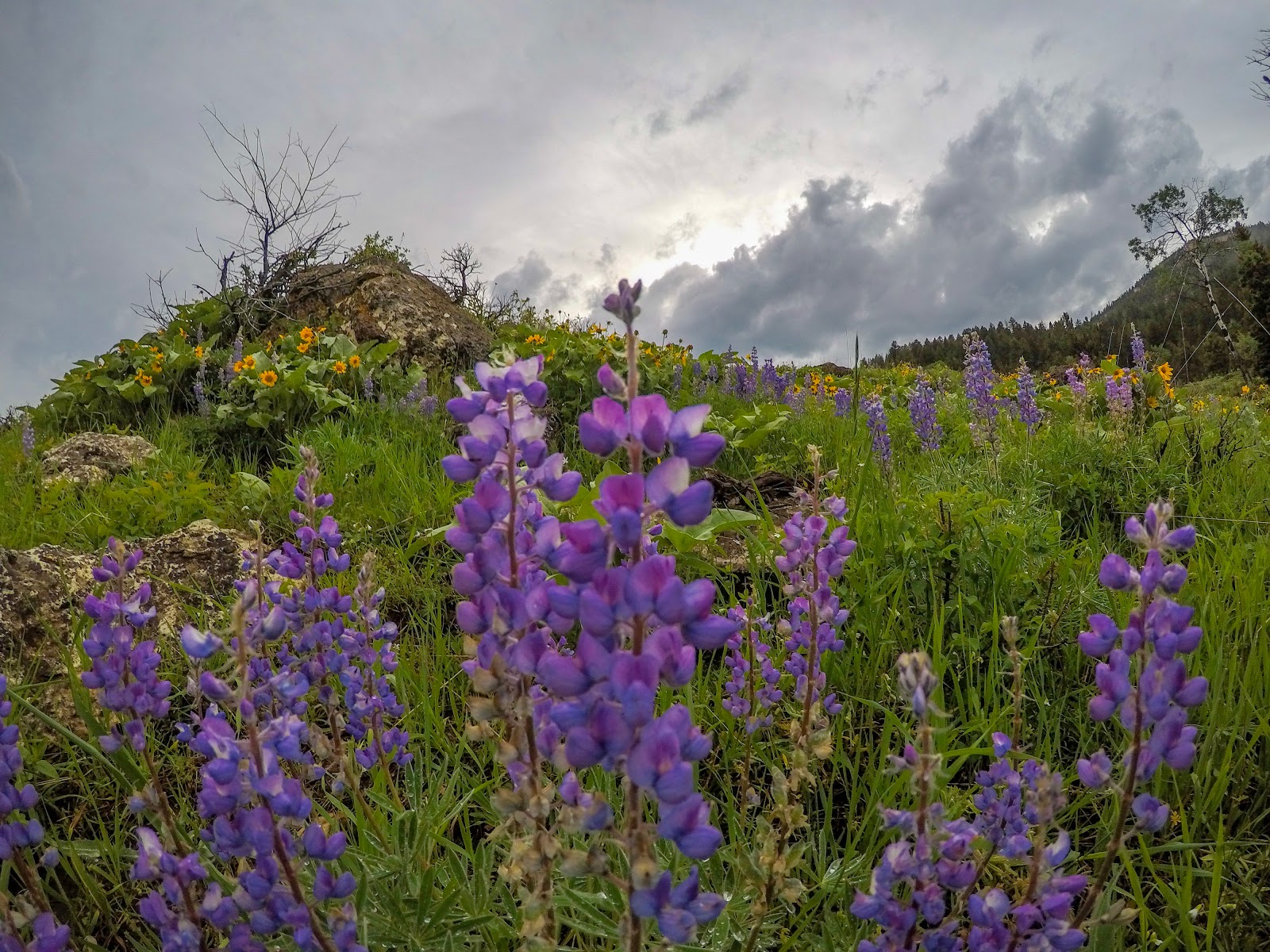
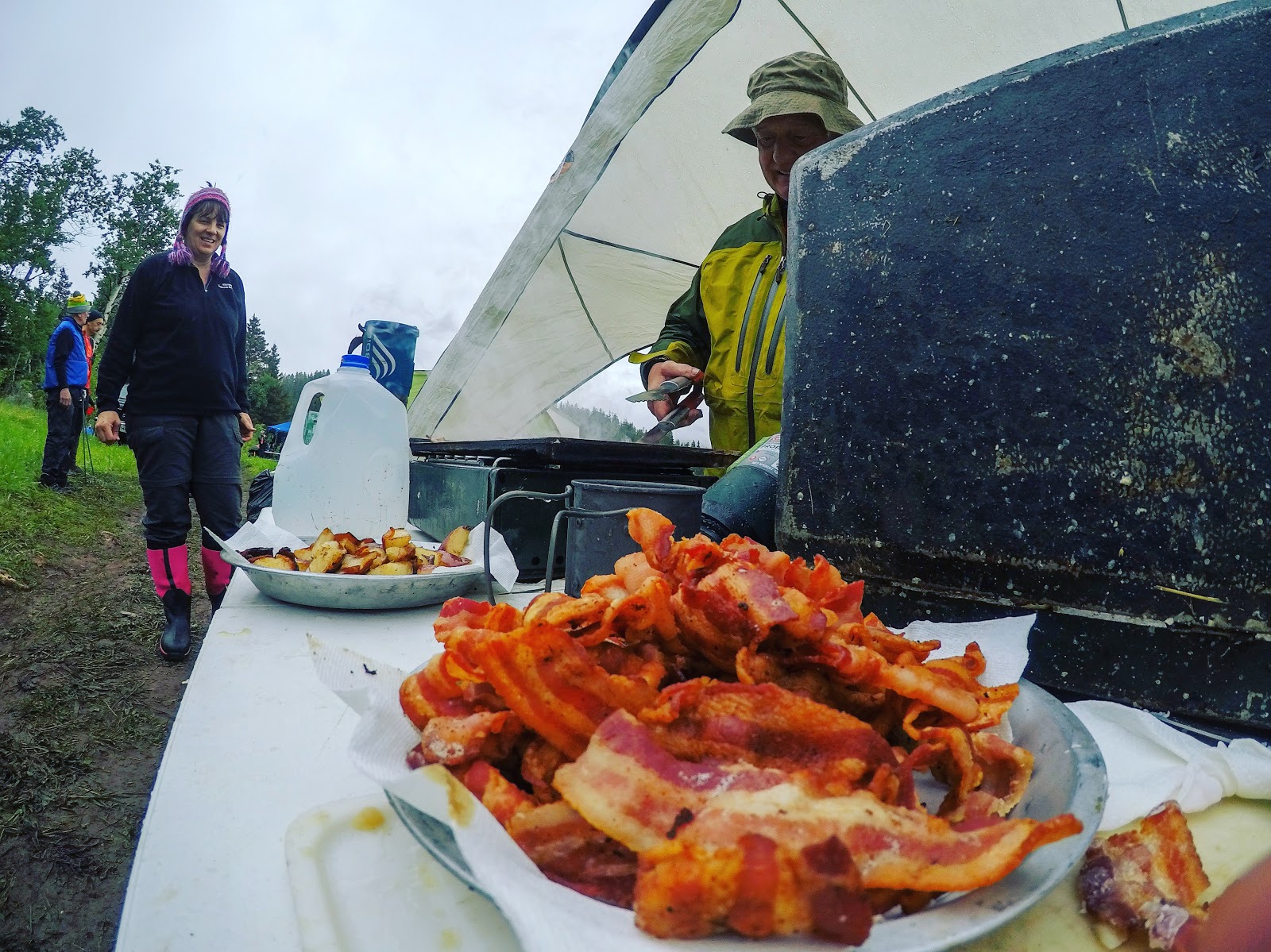 The next aid station was Cow Camp at mile 76.5 and this was a long 7 miles for me. I was feeling essentially pain free and not bad physically, I was just moving slow with a low heart rate. I recharged my watch again just to be sure it would capture the whole race. During this section, I became convinced that I would finish even if I had to walk it all the way in. Cow Camp famously is the bacon aid station but as usual, I decided to not eat any real food and just stuck with my Gels and liquid nutrition. At this point, I was using less Maurten as it wouldn’t dissolve and mostly drinking their GU Brew. This was occasionally full strength and occasionally not. I sometimes added my own GU Brew. I stopped getting 300 calories an hour in but still was getting ~200. Cow Camp to Dry Fork and my last drop bag was on a dirt road and the walking continued for me. The runner and his pacer whom I had left Foot Bridge with were far in the distance and it was on the final climb that I met another first time 100 mile runner. We power hiked into Dry Fork in the midst of a supportive crowd. I was handed my drop bag but didn’t need any nutrition and just filled my bottles and headed out (4 min turn around). I arrive 22 hours and 42 mins into the race; this was mile 82.5.
  Again with a fast turn around, I left alone and hiked up to the top of a ridge along a dirt road. The next section became more runnable but I still walked more than I thought I should. At this point, I was back in the cloud and it was very chilly. The 5 miles to Upper Sheep Creek aid station were again disorienting as I was totally alone and the course markings were less frequent. Following that aid station, we hit the steeper down hill along what was now a very muddy and wet path. As I made my way down gingerly, the first of the 30k runners bombed past me at what felt like irresponsible speeds. I really couldn’t believe how fast they were running on very slick trails. I physically felt fine but was still stuck in this mental rut of having to be careful and to keep the running slow. After a few more 30k and then the beginning of the 50k runners passed me, the clouds began to break slightly. Finally I was passed by a 100 mile runner, the first time I had been passed since Foot Bridge (this may or may not be true). That shook me out of my funk and I decided I would run with him. All of a sudden we were really running and I felt great. No hip pain, no hamstring pain, no pubic bone pain. Just running. I held my poles in my hands and just went along for the ride. We continued to be passed by the racers from the other distances but not at such an embarrassing rate. We cruised through Lower Sheep Creek where again I got water and nothing else. This was mile 92.5 and mentally I was already mentally practicing crossing the finishing line (would I cry? should I take off my hat?). I stuck with the guy who had passed all the way to the Tongue River Trail Head aid station at mile 94.8 planning to see how fast I could run the road. He stopped for a bathroom break and I just kept running.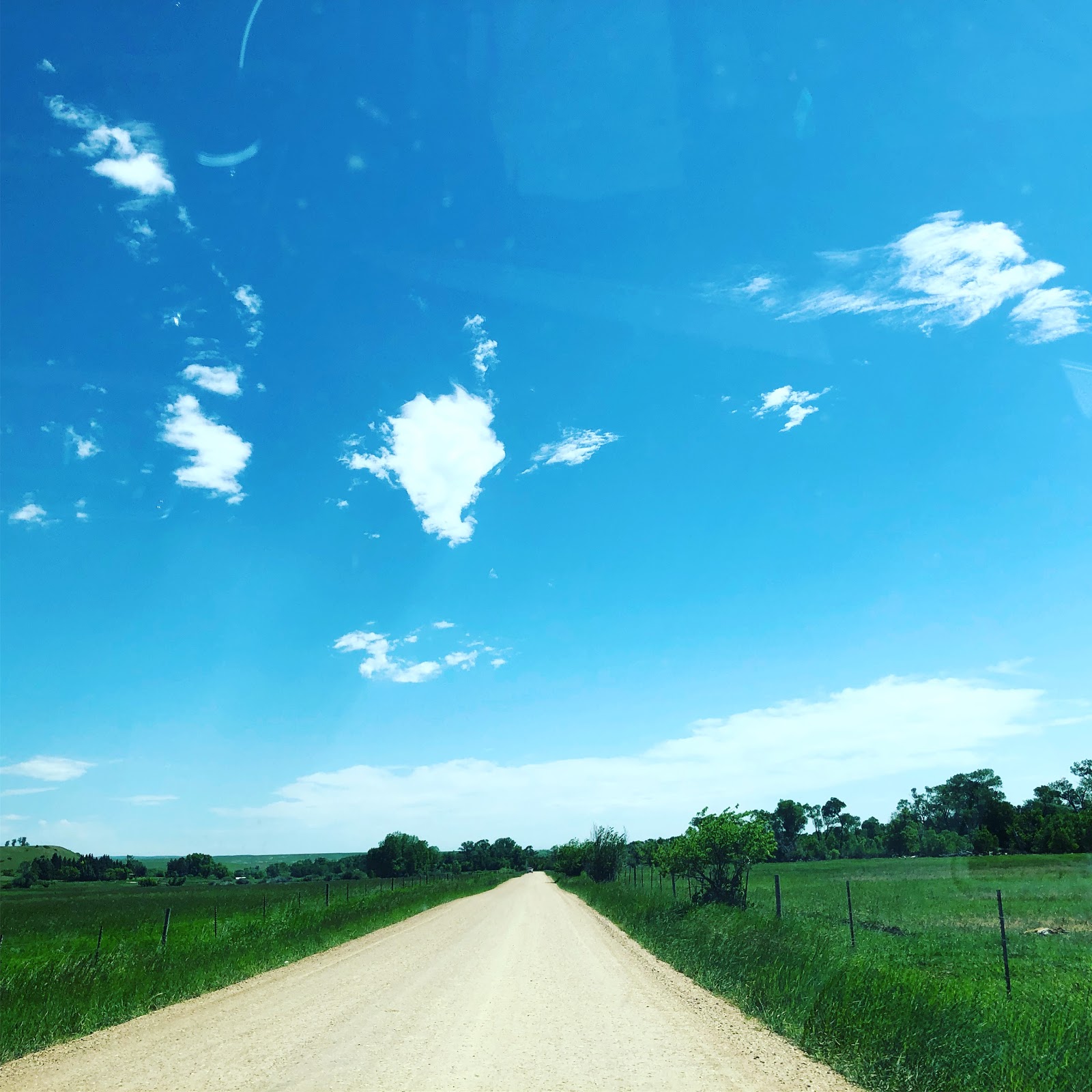

 Spectacularly Unimportant